Fish counts · Kasilof River
Kasilof River Sockeye Salmon Run Fish Counts
The Kenai's smaller, earlier neighbor, and one of our favorite rivers. An average of 658,996 sockeye a season, peaking Jul 16–Jul 22, about a week before the Kenai.
The short version
Kasilof sockeye at a glance
- Jul 16–Jul 22peak week, 20% of the run
- Jun 11our Kasilof sockeye trips start
- 658,996average season, 2016–2025
- 21,000+sockeye a day at the average peak
- 145,582busiest day: July 24, 2026
- 1,055,5652026 season: 60% above average
- 2026: Kasilof sockeye counted each day
- An average day, 2016–2025 (7-day average)
Counts: ADF&G preliminary daily counts as published by Alaska FishTopia; timing from the 2016–2025 seasons.
Show the numbers
| Day | 2026 count | Average day |
|---|---|---|
| Jun 15 | 4,785 | 2,778 |
| Jun 16 | 7,085 | 3,596 |
| Jun 17 | 9,540 | 4,417 |
| Jun 18 | 14,046 | 5,318 |
| Jun 19 | 17,369 | 5,591 |
| Jun 20 | 22,302 | 5,912 |
| Jun 21 | 16,908 | 6,178 |
| Jun 22 | 12,891 | 6,426 |
| Jun 23 | 12,739 | 6,617 |
| Jun 24 | 20,535 | 6,849 |
| Jun 25 | 13,713 | 7,067 |
| Jun 26 | 15,311 | 7,345 |
| Jun 27 | 17,918 | 7,945 |
| Jun 28 | 20,445 | 8,371 |
| Jun 29 | 17,491 | 8,677 |
| Jun 30 | 10,463 | 9,118 |
| Jul 1 | 15,184 | 9,398 |
| Jul 2 | 18,596 | 9,710 |
| Jul 3 | 20,307 | 10,218 |
| Jul 4 | 14,864 | 10,448 |
| Jul 5 | 10,783 | 11,226 |
| Jul 6 | 11,063 | 11,799 |
| Jul 7 | 15,162 | 12,207 |
| Jul 8 | 21,377 | 12,522 |
| Jul 9 | 12,753 | 12,592 |
| Jul 10 | 11,257 | 12,041 |
| Jul 11 | 12,765 | 11,359 |
| Jul 12 | 11,378 | 10,695 |
| Jul 13 | 11,412 | 11,757 |
| Jul 14 | 12,819 | 14,054 |
| Jul 15 | 7,644 | 15,070 |
| Jul 16 | 11,041 | 16,697 |
| Jul 17 | 20,480 | 19,450 |
| Jul 18 | 27,650 | 20,767 |
| Jul 19 | 21,682 | 20,869 |
| Jul 20 | 17,564 | 20,120 |
| Jul 21 | 12,634 | 18,347 |
| Jul 22 | 6,840 | 18,393 |
| Jul 23 | 88,830 | 18,041 |
| Jul 24 | 145,582 | 16,705 |
| Jul 25 | 95,400 | 16,364 |
| Jul 26 | 33,056 | 16,191 |
| Jul 27 | 15,995 | 15,580 |
| Jul 28 | 11,752 | 14,774 |
| Jul 29 | 12,087 | 13,518 |
| Jul 30 | 9,745 | 12,078 |
| Jul 31 | 10,243 | 10,788 |
| Aug 1 | 9,191 | 10,026 |
| Aug 2 | 14,511 | 9,772 |
| Aug 3 | 13,999 | 9,213 |
| Aug 4 | 12,654 | 8,811 |
| Aug 5 | 9,187 | 8,301 |
| Aug 6 | 8,242 | 7,841 |
| Aug 7 | 6,295 | 7,129 |
| Aug 8 | — | 6,355 |
| Aug 9 | — | 5,674 |
| Aug 10 | — | 5,117 |
| Aug 11 | — | 4,410 |
| Aug 12 | — | 3,905 |
| Aug 13 | — | 3,276 |
| Aug 14 | — | 2,900 |
| Aug 15 | — | 2,576 |
| Aug 16 | — | 2,272 |
| Aug 17 | — | 2,036 |
| Aug 18 | — | 1,749 |
| Aug 19 | — | 1,473 |
| Aug 20 | — | 1,290 |
2026 was the Kasilof's second-biggest season of the last 15: 1,055,565 sockeye, 60% above average. That is why we fish more than one river: when one run is late or light, another is usually right on time.
Escapement
How fast the Kasilof fills up
The Kasilof's run is generally very healthy and strong. In 10 of the last 10 seasons the count passed the bottom of Fish and Game's goal range, at a median of Jul 6; in 2026 it got there by Jun 25.
Some of the Kasilof's biggest counts come in years when Kenai kings are in trouble. To protect the kings, Fish and Game also limits the commercial sockeye nets near the mouths of the Kenai and Kasilof, and with fewer nets in the water many more sockeye reach the river. In years when the nets fish normally the counts are lower, and the fishing is excellent just the same.
- 2026: counted so far
- An average season, 2016–2025
- Fish and Game's goal range
Counts: ADF&G preliminary daily counts as published by Alaska FishTopia; timing from the 2016–2025 seasons. Goal ranges as Alaska FishTopia prints them.
Show the numbers
| Through | 2026 so far | Average season so far |
|---|---|---|
| Jun 15 | 4,785 | 4,830 |
| Jun 22 | 104,926 | 43,966 |
| Jun 29 | 223,078 | 95,377 |
| Jul 6 | 324,338 | 166,902 |
| Jul 13 | 420,442 | 251,192 |
| Jul 20 | 539,322 | 387,341 |
| Jul 27 | 937,659 | 504,279 |
| Aug 3 | 1,019,187 | 579,798 |
| Aug 10 | — | 629,705 |
| Aug 17 | — | 650,008 |
| Aug 24 | — | 657,744 |
Run timing
Two rivers, one week apart
Fishing is usually good right from the start of the Kasilof run in mid-June, and the daily count builds until the peak in the third week of July. Because the Kasilof peaks about a week before the Kenai, the second half of July has two big runs at once, ten miles apart.
- Kenai sockeye
- Kasilof sockeye
Counts: ADF&G preliminary daily counts as published by Alaska FishTopia; timing from the 2016–2025 seasons. Average fish counted per day (7-day average).
Show the numbers
| Week of | Kenai sockeye | Kasilof sockeye |
|---|---|---|
| Jun 10 | — | — |
| Jun 17 | — | 4,417 |
| Jun 24 | — | 6,849 |
| Jul 1 | 4,005 | 9,398 |
| Jul 8 | 16,491 | 12,522 |
| Jul 15 | 32,458 | 15,070 |
| Jul 22 | 63,161 | 18,393 |
| Jul 29 | 63,666 | 13,518 |
| Aug 5 | 47,838 | 8,301 |
| Aug 12 | 29,879 | 3,905 |
| Aug 19 | 21,221 | 1,473 |
15 seasons
Every season since 2012
Show the numbers
| Season | Fish counted | Against the ADF&G goal |
|---|---|---|
| 2012 | 374,523 | Above |
| 2013 | 489,654 | Above |
| 2014 | 439,977 | Above |
| 2015 | 470,679 | Above |
| 2016 | 239,981 | Within |
| 2017 | 358,724 | Above |
| 2018 | 394,309 | Above |
| 2019 | 378,416 | Above |
| 2020 | 545,654 | Above |
| 2021 | 521,859 | Above |
| 2022 | 971,604 | Above |
| 2023 | 932,896 | Above |
| 2024 | 1,048,092 | Above |
| 2025 | 1,198,423 | Above |
| 2026 | 1,055,565 | Above |
How it is counted
The Kasilof sonar
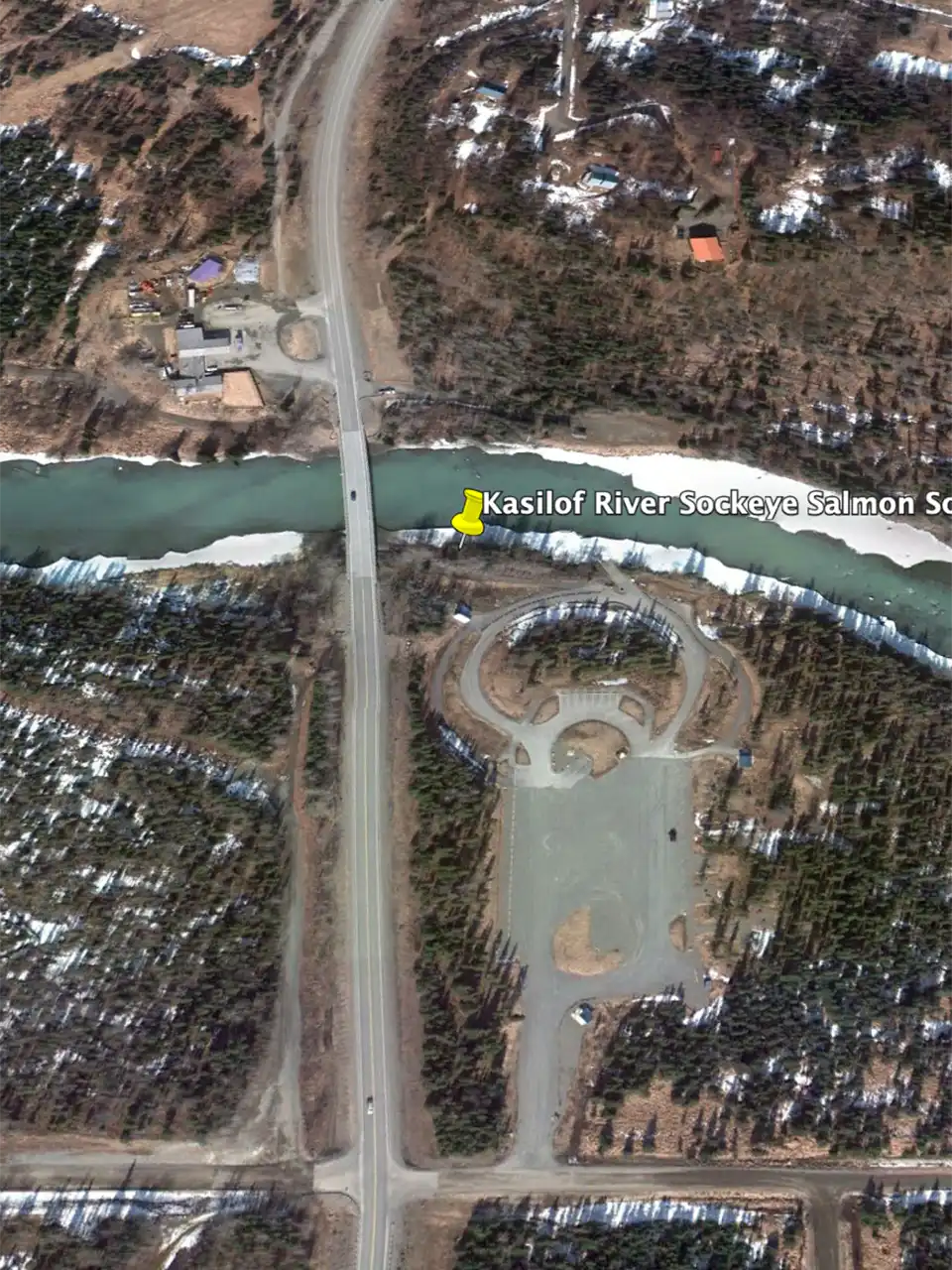
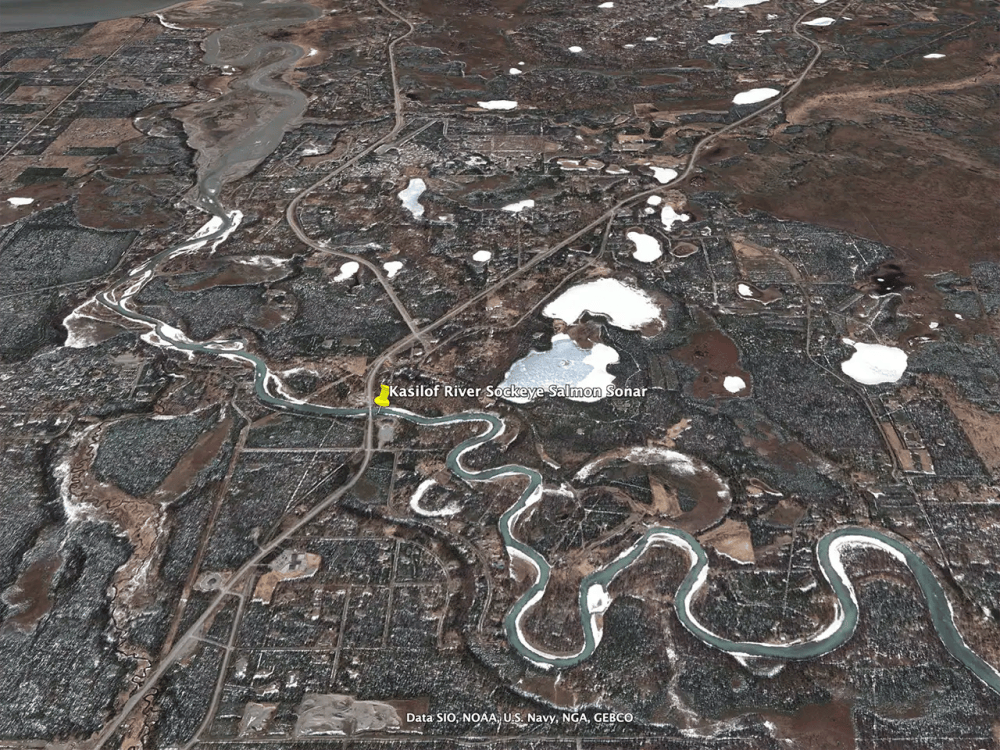
The Kasilof sonar sits at river mile 7.8, just above the Sterling Highway bridge in Kasilof and next to the Kasilof River State Recreation Area. Two counting stations face each other across the river, each with a sonar transducer near the bank and a shelter for the electronics. Here the river runs through a single 190-foot-wide channel over cobble and boulders.
The Kasilof drains Tustumena Lake, the largest lake on the Kenai Peninsula: 115 square miles and up to 942 feet deep, fed by the Tustumena Glacier off the Harding Icefield. Its glacial silt makes the river too murky for a counting tower, and the river is too wide for a weir, so sonar it is.

Questions
Kasilof River sockeye count questions
When do sockeye run on the Kasilof River?
The Kasilof's sockeye are usually counted from Jun 15 to Aug 14, about a week ahead of the Kenai. The peak week is Jul 16–Jul 22, and in most years half the run has passed between Jul 17 and Jul 20. Our Kasilof sockeye trips start June 11.
How many sockeye run up the Kasilof?
An average of 658,996 a season over 2016–2025. The most in the last 15 seasons was 1,198,423 in 2025.
Why are some Kasilof sockeye counts so high?
When Kenai king salmon are in trouble, Fish and Game also limits the commercial sockeye nets near the mouths of the Kenai and Kasilof, because they can catch kings by accident. With fewer nets in the water, many more sockeye make it into the rivers.
Where is the Kasilof River sonar?
At river mile 7.8, just above the Sterling Highway bridge in Kasilof, beside the Kasilof River State Recreation Area. A sonar station on each bank listens across a single 190-foot channel.
Counts are Fish and Game's preliminary in-season numbers and can be revised. Fish and Game can change seasons and limits by emergency order: check the current regulations before you fish.
More fish counts
Every run we watch
- All Kenai Peninsula countsEvery counted run on one page
- Kenai River fish countsSockeye, kings and the Russian
- Kenai River sockeyeThe big July run
- Kasilof River sockeyeThe earlier run, next river south
- Russian River sockeyeEarly run in June, late run in August
- Kenai River kingsEarly and late runs
- Kenai River silversWhy there is no count, and when to come
- Salmon run timing, May to OctoberThe whole season, month by month
Counts: ADF&G preliminary daily counts as published by Alaska FishTopia; timing from the 2016–2025 seasons. All counts on these pages come from Alaska FishTopia, which posts them daily in season; the Alaska FishTopia app sends count alerts to your phone.